
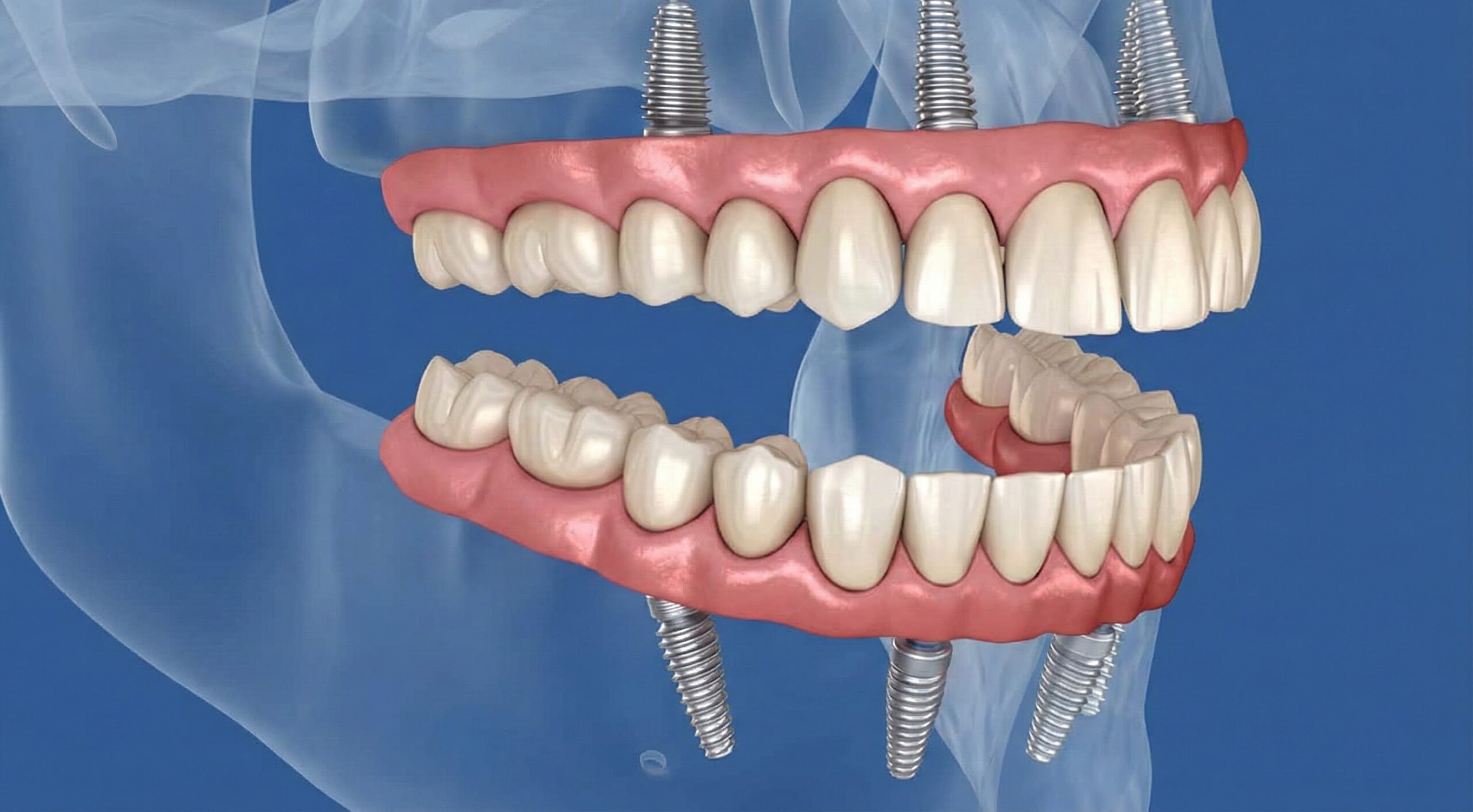
If you are living with missing teeth, a loose denture, or teeth that keep breaking down, you have likely searched for a long-term solution that feels more stable and natural. One option many patients ask about is All-on-X, a type of full-arch dental implant treatment designed to replace an entire upper or lower arch of teeth.
This guide explains what All-on-X means, who may be a good candidate, what the process typically looks like, and why working with a local Maywood, NJ dentist matters. It is written for patients in Maywood and nearby communities such as Hackensack, Paramus, Rochelle Park, River Edge, Saddle Brook, Lodi, Garfield, and Teaneck.
Meet Your Maywood, NJ Dentist: Dr. John Mady
At Spring Valley Dental Care, patients are cared for by Dr. John Mady, DDS, FAGD, AFAAID. Dr. Mady’s approach emphasizes patient education, clear communication, and personalized treatment planning—especially for more complex cases such as full-arch tooth replacement. If you would like to learn more about Dr. Mady’s background and approach, visit: https://dentalcarespringvalley.com/our-doctor/
Dr. Mady’s Highlights (At a Glance)
• DDS – New York University (NYU)
• MS in Biomedical Science – Rutgers University
• Fellow of the Academy of General Dentistry (FAGD)
• Associate Fellow of the American Academy of Implant Dentistry (AFAAID)
• Training and experience supporting implant-focused care and patient comfort
What Does “All-on-X” Mean?
“All-on-X” is a general term for replacing a full arch of teeth using a set number of dental implants. The “X” simply means the number of implants used to support the restoration. For example, some cases use 4 implants, others may use 5, 6, or more depending on your bone quality, your bite, and the design of the final teeth.
All-on-X typically refers to a fixed solution—meaning the replacement teeth are attached to implants and are not meant to be removed daily like a traditional denture.
Why Patients in Maywood, NJ Consider All-on-X
Patients often explore All-on-X when they want to move away from the daily challenges of missing teeth or unstable dentures. Common reasons include:
• A denture that slips, clicks, or needs adhesive
• Difficulty chewing foods you used to enjoy
• Multiple failing teeth with recurring infections or fractures
• Worn-down teeth from years of dental breakdown
• Embarrassment about smiling or speaking in public
Many people from Maywood and nearby areas like Paramus and Hackensack like the idea of a solution that can improve stability and function while also supporting facial structure.
Who May Be a Candidate for All-on-X?
The best way to determine candidacy is with an in-person evaluation, imaging, and a full treatment plan. In general, All-on-X may be considered if you:
• Are missing many teeth or are expected to lose most teeth in an arch
• Have a denture and want a more stable alternative
• Have teeth that are “hopeless” due to gum disease, decay, or fractures
• Want a fixed, implant-supported option rather than a removable solution
Factors That Can Affect Candidacy
A Maywood NJ dentist will typically evaluate the following:
• Gum health: Active gum disease must be treated and stabilized
• Bone health: Bone quality and volume influence implant planning
• Medical history: Conditions like uncontrolled diabetes may affect healing
• Smoking/vaping: Can increase implant complication risk
• Clenching/grinding: May require bite protection and design adjustments
If you have significant bone loss, you may still be a candidate, but the plan may require additional steps, different implant placement strategies, or alternative designs.
Benefits of All-on-X Compared to Traditional Dentures
While every case is different, patients often consider All-on-X because it may offer advantages over removable dentures, such as:
• Improved stability: Less movement compared to many traditional dentures
• More confident chewing: Many patients find it easier to eat a wider range of foods
• Clearer speech: A more stable prosthesis may reduce slipping while talking
• No denture adhesive: Many implant-supported options do not rely on paste
• A fixed feel: Teeth are attached to implants rather than removed nightly
A local dentist in Maywood, NJ can help you compare realistic outcomes based on your oral health, anatomy, and goals.
All-on-X vs. All-on-4 vs. Individual Implants
You will often see “All-on-4” in online searches. All-on-4 is one specific approach that commonly uses four implants to support a full arch. However, not every patient is best served by the same number of implants.
For more information about the All-on-4 full-arch fixed solution, visit:
https://dentalcarespringvalley.com/all-on-4-full-arched-fixed-solution/
All-on-4 (One Variation)
• Often uses four implants to support a full-arch bridge
• May be planned to maximize available bone in certain anatomies
• Can be appropriate for certain bone patterns and goals
All-on-X (More Flexible)
• The number of implants can vary
• Planning is based on bite forces, bone, and clinical goals
• May provide additional support in some cases, depending on design
Individual Implants (Tooth-by-Tooth)
• Best when you only need to replace a few teeth
• May be less efficient for a full arch if many teeth are failing
• Can be more complex when multiple teeth require extraction and replacement
A thorough exam and imaging—often including 3D planning—helps determine what approach is appropriate for you.
What to Expect: Step-by-Step All-on-X Treatment
While treatment varies by patient, here is a common sequence your dentist may follow.
- Consultation and Imaging
Your visit typically includes:
• A detailed exam of teeth, gums, and bite
• A discussion of your goals (function, aesthetics, timeline)
• Imaging such as panoramic X-rays and often a 3D scan (CBCT) for implant planning
• A review of medical history and medications
If you are coming from Rochelle Park, River Edge, or Saddle Brook, this is often the appointment where you get clarity on what is possible and what steps are involved.
- Treatment Planning
Planning may include:
• Whether extractions are needed
• Implant number and placement strategy
• Temporary tooth options during healing (if applicable)
• Final tooth material options
• A schedule for each phase - Extractions and Implant Placement (If Needed)
Some cases involve removing failing teeth before or during implant placement. Implant surgery is commonly performed with local anesthesia and, when appropriate, sedation options. - Temporary Teeth (In Some Cases)
Many patients ask, “Can I get teeth the same day?” In some cases, a temporary bridge may be delivered soon after extraction and implant placement. However, this depends on implant stability, bone conditions, and clinical judgment. It is not appropriate or safe to promise this for every patient. - Healing and Follow-Up
Dental implants need time to integrate with the bone. During this phase, you will have follow-ups to monitor healing and ensure the bite is controlled. - Final Restoration
Once healing is complete, your final fixed teeth are designed for long-term function and aesthetics. This includes bite fine-tuning, smile design, material selection, and maintenance planning.
Recovery and Aftercare Tips
Your dentist will provide specific post-op directions, but common recommendations may include:
• Eat softer foods during early healing phases
• Keep follow-up appointments to monitor healing
• Use prescribed rinses or medications as directed
• Avoid smoking/vaping, especially during healing
• Maintain excellent oral hygiene (implants still require daily care)
• Consider a nightguard if you grind your teeth
Long-term success is strongly tied to maintenance and professional monitoring.
Risks, Limitations, and Why Planning Matters
All-on-X can be an excellent solution for the right patient, but it is still a surgical and restorative procedure with potential risks. These may include:
• Infection or inflammation around implants
• Implant integration issues
• Bite-related complications (especially with clenching/grinding)
• Changes in bone and gum contours over time
• Prosthetic wear or breakage that requires repair or replacement
This is why a comprehensive plan—guided by proper imaging and bite analysis—is essential.
When It’s Urgent: Call a Dentist Right Away
If you have any of the following, do not wait:
• Facial swelling, fever, or a bad taste that may indicate infection
• Severe tooth pain that is not controlled with typical measures
• Bleeding that does not stop
• Trauma to the mouth or jaw
• Difficulty swallowing or breathing
If this is a medical emergency, call 911 or go to the nearest emergency room.
Summary
All-on-X is a full-arch dental implant solution that replaces an entire arch of teeth using a planned number of implants. It may be a strong option for patients with missing teeth, failing teeth, or unstable dentures who want a fixed, more stable alternative. The right plan depends on your anatomy, medical history, bite forces, and goals—so an evaluation and proper imaging are essential.
If you are researching All-on-X and looking for a Maywood NJ dentist, schedule a consultation to discuss whether full-arch dental implants are appropriate for your situation and what a realistic treatment plan would look like.
FAQs: All-on-X (Maywood, NJ)
How many implants are used in All-on-X?
It varies. “X” refers to the number of implants used to support a full-arch restoration—often 4, 5, 6, or more depending on your case.
Does All-on-X hurt?
Most patients report manageable discomfort after surgery, but experiences vary. Your dentist can discuss anesthesia and sedation options and how recovery is typically managed.
Can I get temporary teeth the same day?
In some cases, temporary teeth may be delivered soon after implant placement, but it depends on implant stability and bone conditions. Your dentist will advise what is safe for your case.
What if I have bone loss?
Bone loss does not automatically rule out implants. Your dentist may recommend different placement strategies or additional procedures depending on your anatomy.
How long does All-on-X last?
With proper planning, daily hygiene, and routine professional maintenance, All-on-X restorations can last many years. However, components can wear and may require repair or replacement over time.
Is All-on-X better than dentures?
It depends on your goals, anatomy, and preferences. Many patients prefer the stability of implant-supported teeth, but dentures can still be appropriate for some situations.
How do I clean All-on-X teeth?
Cleaning is critical. Your dentist may recommend special brushes, flossing tools, water flossers, and regular professional cleanings to maintain implant health.
Disclaimer: This blog is for educational purposes and is not medical advice. A dental evaluation is needed to determine the best treatment for your specific needs.